
How to Keep Your Kitchen Looking New for 10+ Years
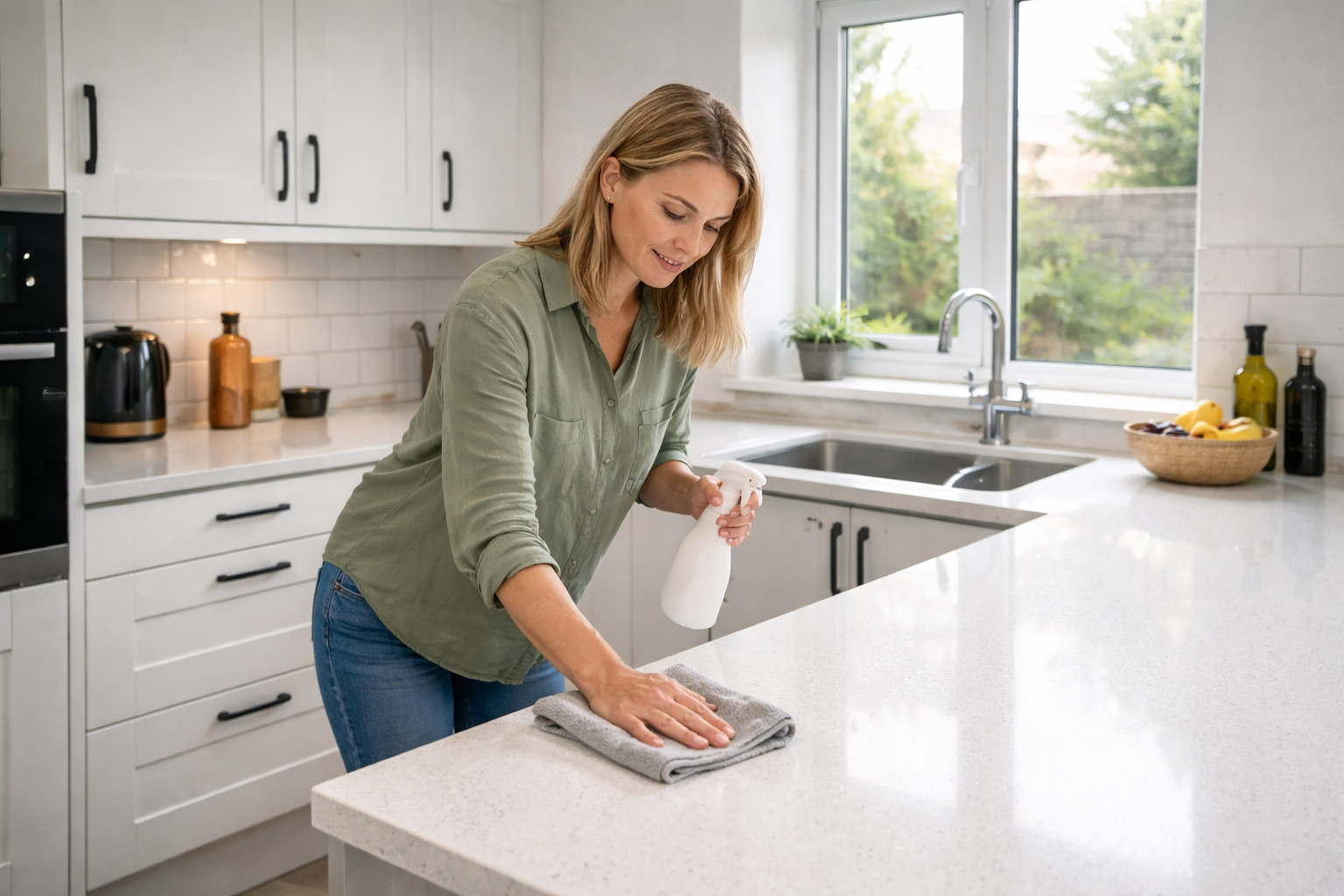
There’s nothing quite like seeing your kitchen finished for the first time. Everything lines up. The doors are flawless. The worktops are clean and sharp. It feels solid. Fresh. Proper.
The good news? It doesn’t have to stop looking like that after year one.
Most kitchens don’t age badly because they were poorly installed. They age because of small, repeated habits — moisture left sitting, heat damage, harsh cleaning products, and a bit of general neglect.
This guide is a practical take on kitchen aftercare and maintenance: simple steps you can build into daily life so your kitchen still looks smart 10 years from now.
The 5 biggest causes of early kitchen wear
Before we talk about what to do, it helps to understand what actually causes problems.
1) Moisture
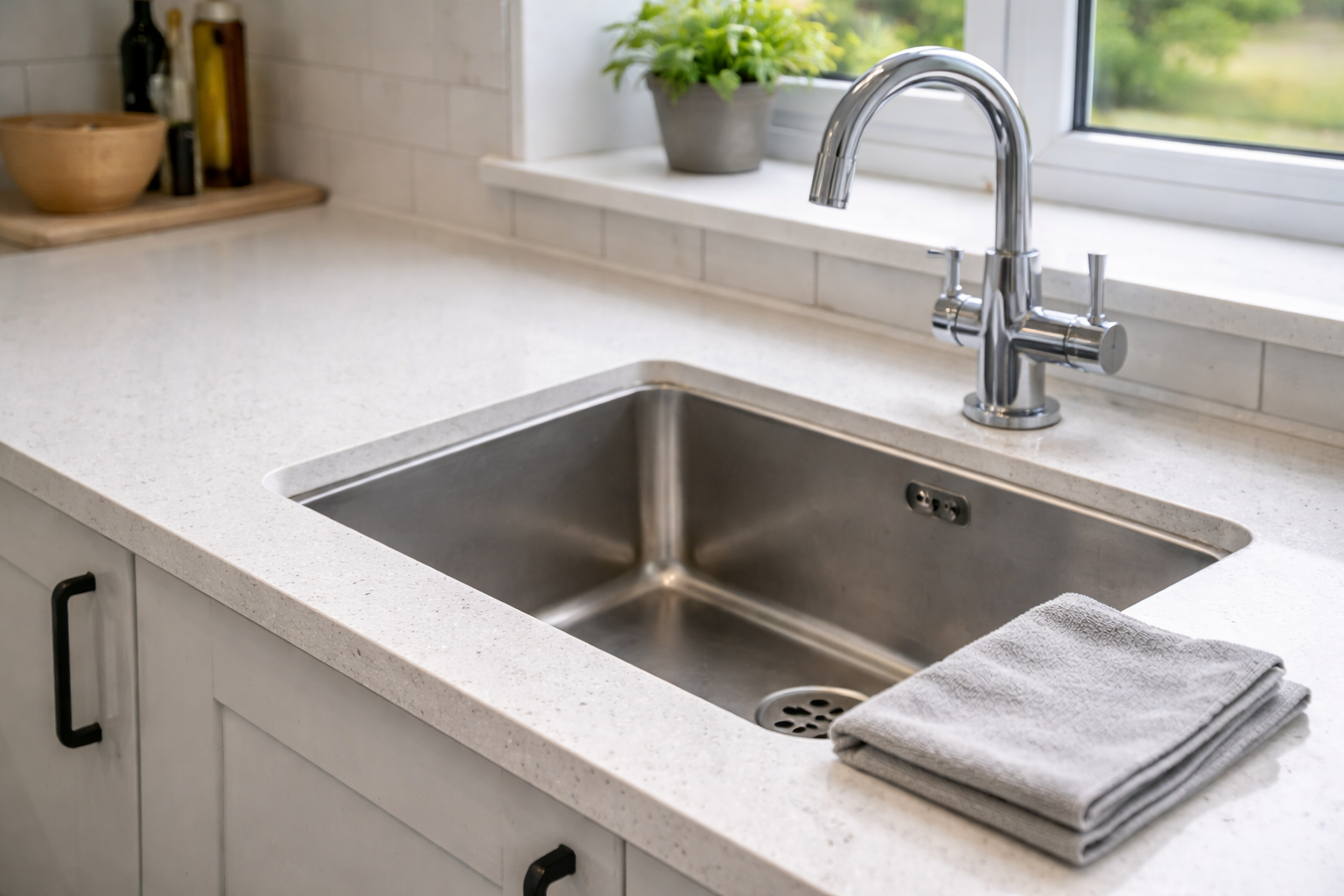
Water is the biggest long-term enemy of kitchens. Not dramatic leaks — just everyday splashes around sinks, kettles, and worktops that are left to sit.
Over time, moisture can:
- Swell cabinet edges
- Break down silicone
- Cause worktop joints to lift
- Stain timber surfaces
2) Heat
Steam from kettles and boiling pans rises straight into cabinet edges and doors. Toasters pushed hard against splashbacks can discolour panels. Heat damage doesn’t happen overnight — but it builds up.
3) Harsh cleaning products
Bleach, abrasive sprays, and rough scourers slowly dull finishes and wear down protective coatings. Gloss doors go patchy. Matt doors become shiny in places. Worktops lose their sheen.
4) Poor ventilation
If steam has nowhere to go, it settles on ceilings, doors, and units. That constant damp atmosphere shortens the life of everything — and makes routine kitchen aftercare and maintenance feel harder than it needs to be.
5) Slamming doors & ignoring adjustments
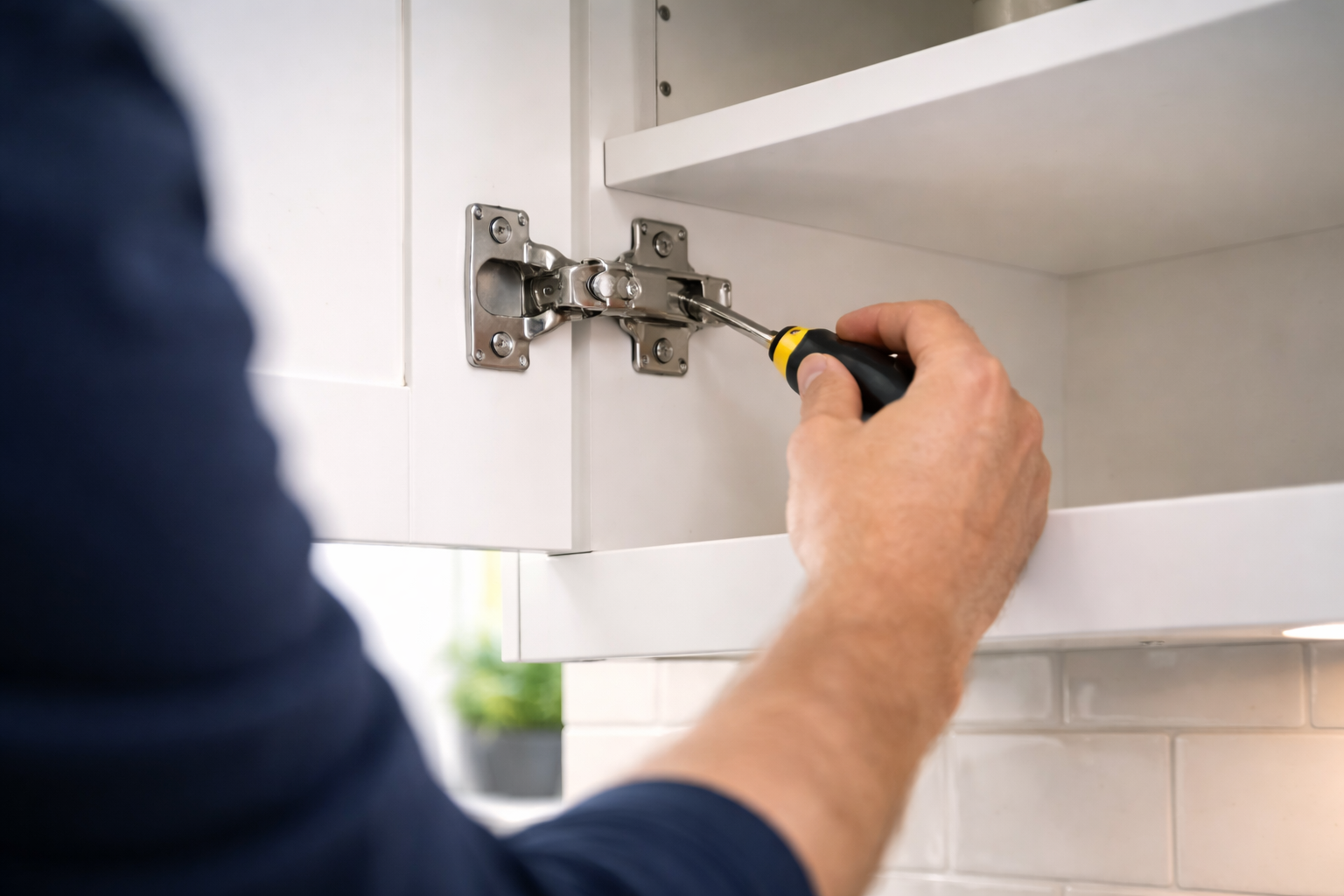
Even good-quality hinges need occasional adjustment. If doors start catching and nothing is done, it puts stress on fixings and panels. Small tweaks prevent bigger issues.
Daily habits that make a huge difference
The best kitchen aftercare and maintenance is the boring stuff done consistently. Most of it takes less than five minutes.
- Wipe worktops properly — not just the middle, but edges and around joints.
- Dry around the sink and tap base at the end of the day.
- Clean spills immediately (especially tea, wine, curry, oil).
- Don’t leave water sitting against silicone seals.
- Always use your extractor fan when cooking.
- Open a window after heavy steam cooking.
Real-world tip: If your kitchen starts looking “tired”, it’s usually because moisture has been left to sit in the same places for months. Fix the habit and the kitchen stays crisp.
Looking after different surfaces properly
Not all kitchens are cleaned the same way. A big part of long-term kitchen aftercare and maintenance is matching the method to the finish.
Worktops
- Laminate: Use a soft cloth and mild cleaner. Avoid soaking joints. Never use abrasive pads.
- Solid wood: Re-oil when it starts looking dry — usually once or twice a year depending on use. Always wipe water quickly. Never let puddles sit.
- Quartz: Very durable, but still avoid harsh chemicals. Warm soapy water is enough most of the time.
- Compact laminate: Extremely moisture resistant, but still protect cut edges and avoid dragging heavy items across the surface.
Cabinet doors
- Matt doors: Use microfibre cloths only. Avoid polish — it can cause shiny patches.
- Gloss doors: Soft cloths only. Never use cream cleaners or scouring pads.
- Painted timber doors: Treat them like painted furniture. Gentle cleaning only. Touch up chips early before moisture gets underneath.
Also worth remembering: handles loosen over time. A quick tighten once a year keeps everything solid.
Sinks & taps
In South Wales, limescale is common. Wipe taps dry daily to prevent build-up. Use a gentle limescale remover occasionally — not industrial-strength descaler.
Never use wire wool on stainless steel or brushed finishes. It scratches permanently.
Protecting against heat & steam damage
This is one of the most overlooked issues in everyday kitchen maintenance.
- Don’t let kettles steam directly under wall units.
- Pull toasters forward when in use.
- Don’t open dishwashers fully until steam has settled slightly.
- Make sure extractor filters are cleaned regularly.
If appliances are tight against panels, even shifting them slightly can extend the life of surrounding cabinets.
When to re-seal, re-adjust or refresh
Maintenance doesn’t mean something has failed. It means you’re looking after it.
- Check silicone around sinks and splashbacks annually. If it’s cracked or peeling, re-seal it.
- Adjust hinges if doors stop lining up perfectly.
- Re-oil timber worktops when water stops beading on the surface.
- Tighten handles and check drawer runners.
These are normal parts of owning a kitchen — just like servicing a car.
Your annual kitchen health check
Once a year, take 20 minutes and look over:
- Silicone seals
- Worktop joints
- Door alignment
- Loose handles
- Signs of water sitting around sinks
- Extractor fan filters
- Chips in painted surfaces
Small fixes now prevent expensive repairs later — and they’re the backbone of sensible kitchen aftercare and maintenance.
Final thoughts
A kitchen doesn’t stay looking new by accident. But it doesn’t take constant effort either.
It’s small habits. Light maintenance. Paying attention before problems grow.
We’ve installed kitchens that still look fantastic well over a decade later — not because they’ve never been used, but because they’ve been looked after. Your kitchen is built to be lived in.
Keep on top of the basics, and there’s no reason it can’t look great for 10, 12, even 15 years. Renovation is temporary — the calm you get from a home that works properly is the bit that lasts.


